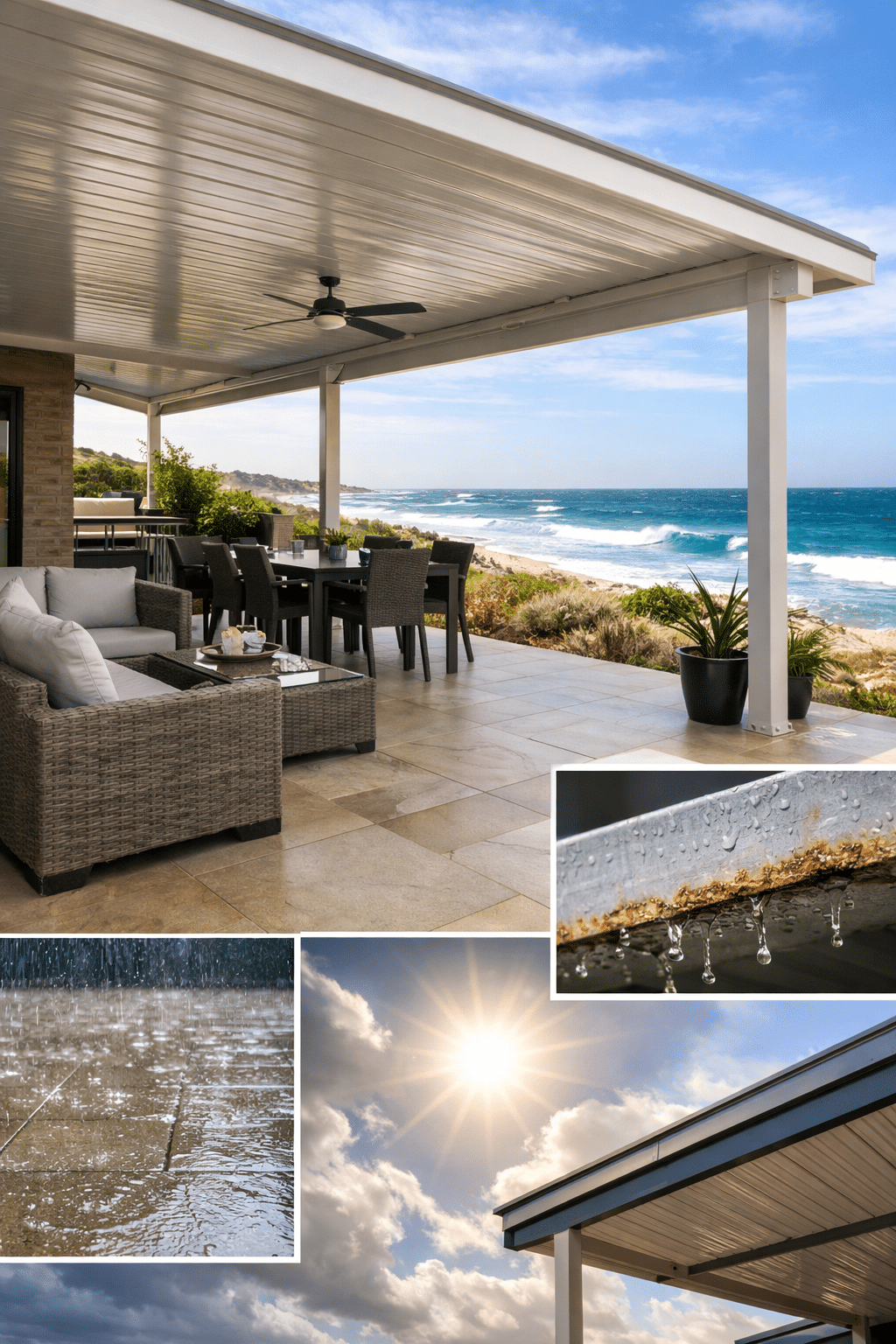
Lifespan of a patio is one of the first things homeowners should think about when planning a new outdoor area. A patio is more than just an attractive addition to your home. It is a place for weekend barbecues, family catchups, quiet morning coffees, and year-round outdoor living. If you are investing in a new patio, you want to know how long it will last and what can shorten or extend that timeframe.
In Perth and across Western Australia, the biggest influences on patio durability are often the environment around the home. Two of the most important are proximity to the coast and general weather exposure. Salt in the air, strong sun, heavy rain, and wind can all place stress on a patio over time. The good news is that with the right design, materials, and ongoing care, homeowners can significantly improve the lifespan of a patio and enjoy their outdoor space for many years.
Why the Lifespan of a Patio Matters
When people think about buying a patio, they usually focus on style, size, colour, and price. Those are all important, but longevity matters just as much. The lifespan of a patio affects the long-term value of your investment, the amount of maintenance you may need, and how well the structure continues to look and perform over time.
A patio that is designed well and built with quality materials can provide years of comfort and protection. On the other hand, a patio exposed to harsh conditions without the right preparation may start to show signs of wear much earlier. That is why understanding the key factors before installation can help you make a smarter decision from the beginning.
Coastal Proximity and Salt Air Exposure
One of the biggest factors affecting the lifespan of a patio is how close your home is to the coast. While living near the beach has obvious lifestyle benefits, it can be much harder on outdoor structures. Salt-laden air can settle on metal surfaces and slowly increase the risk of corrosion, especially if the patio is not cleaned and maintained correctly.
Homes in coastal suburbs often experience faster wear than properties further inland. This does not mean you cannot have a beautiful and durable patio near the ocean. It simply means material selection, protective finishes, and regular maintenance become even more important. Steel patios, powder-coated finishes, and quality roofing materials can all help improve performance in coastal environments when properly cared for.
Weather Exposure Throughout the Year
The lifespan of a patio is also closely tied to how much weather exposure it faces every day. In Western Australia, patios can be subjected to intense UV radiation, seasonal rain, strong winds, and fluctuating temperatures. Over time, constant exposure can affect roofing, fixings, coatings, and the overall appearance of the structure.
A patio installed in a fully exposed area may age differently from one that benefits from surrounding shelter. For example, strong afternoon sun can place extra stress on surfaces, while driving rain and wind may affect certain roof and frame areas more heavily. Good patio design takes local conditions into account so the structure is prepared for the real environment it will face, not just how it looks on installation day.
Material Selection Makes a Big Difference
The lifespan of a patio often comes down to the quality of the materials used. Choosing the right structure for Australian conditions is essential. Steel is a popular option because of its strength, durability, and sleek finish. It also offers a reliable solution for homeowners looking for a low-maintenance outdoor structure when paired with the right roofing system and protective coatings.
Roofing materials matter too. Colorbond and insulated roof panels are popular choices because they are designed for outdoor performance and can handle tough Australian conditions. The right material choice does more than improve strength. It also helps maintain appearance, reduce future maintenance issues, and support better long-term value.
Professional Design and Installation
Even the best materials can underperform if the patio is poorly designed or installed. The lifespan of a patio is heavily influenced by how well the structure is planned from the outset. Important details like orientation, drainage, roof pitch, site conditions, and fixing methods all play a role in how the patio handles daily exposure.
Professional patio builders understand how to assess a site, identify possible issues, and create a structure that suits both the home and the environment. A thorough site check and accurate measurements can prevent costly problems later. Good installation also helps ensure the patio performs as intended during wind, rain, and heat, rather than simply looking good at the handover stage.
The Role of Maintenance
Maintenance is one of the simplest ways to protect the lifespan of a patio, yet it is often overlooked. Outdoor structures do not need complicated care routines, but they do benefit from regular attention. Cleaning away dirt, debris, and salt build-up can help preserve finishes and reduce the chance of premature wear.
It is also important to keep an eye on any cuts, welds, joints, or areas where protective coatings may be affected. Addressing minor issues early can prevent larger problems later. A patio that is cleaned and checked regularly is far more likely to stay in great condition than one that is ignored for years. For homeowners near the coast, this becomes even more important because salt residue can build up faster.
Design Features That Influence Longevity
The lifespan of a patio is not only about what it is made from. It is also about how it is designed for everyday use. Patio orientation can affect how much sun, wind, and rain the structure receives. Lighting features, skylights, roof style, and how the patio connects to the home can all influence performance.
A well-designed patio should feel comfortable, functional, and suited to the way your family lives. It should also be practical enough to handle local conditions. For example, planning for airflow, water runoff, and sun control can help reduce strain on the structure over time. Smart design does not just improve comfort. It supports durability too.
How Homeowners Can Get More Years from Their Patio
If you want to maximise the lifespan of a patio, the best approach is to think long term from the beginning. Choose quality materials, work with experienced professionals, and make sure the design suits your block, location, and lifestyle. Ask questions about weather exposure, maintenance needs, and the best options for your suburb, especially if you live near the coast.
Once your patio is installed, simple care goes a long way. Regular cleaning, prompt touch-ups when required, and routine inspections can help preserve both appearance and structural performance. A patio is an exciting home improvement, and with the right decisions, it can keep adding value, comfort, and enjoyment for years.
Final Thoughts
The lifespan of a patio depends on several important factors, but two stand out above the rest: proximity to the coast and weather exposure. Salt air, harsh sun, rain, and wind can all affect how long a patio lasts, especially if the structure is not designed and maintained with those conditions in mind. Material quality, professional installation, and ongoing care are equally important in protecting your investment.
For homeowners who want an outdoor area that looks fantastic and performs well over time, thoughtful planning is everything. The lifespan of a patio can be improved significantly when you choose a patio designed for Australian conditions and built with durability in mind. That means more time enjoying your outdoor lifestyle and less time worrying about repairs, upkeep, or premature wear.